Every parent knows the feeling: your cheerful baby suddenly turns into a crying, drooling, everything-biting toddler. 'It must be teething,' you often hear. But is that really true? And can a baby really get a fever from teething? What is true and what is a persistent myth? We have listed the facts and myths about teething for you. That way, you will know what to really expect when your baby gets their first teeth.
When do the first teeth come through?
Most babies get their first teeth between 4 and 8 months, but it can be earlier or later. Some babies are even born with a tooth, and others have to wait until after their first birthday. Everything is normal, as long as development eventually gets underway.
Is your child on track? And is there such a thing as a “track”? You can read more about this in our blog: Step by step: when will your baby get their first teeth?
Fact or myth?
8 claims about teething under the microscope
1. ‘Teething causes fever.’
MYTH – with a slight nuance
A slight increase in temperature (up to about 38°C) can occur due to inflammation of the gums, but a real fever (above 38°C) usually indicates another cause, such as a viral infection. Teething does not cause a high fever or a rash on the chest.
When in doubt, trust your parental instincts. Consult your doctor if you are unsure.
2. ‘Babies chew and bite more when they are teething.’
FACT
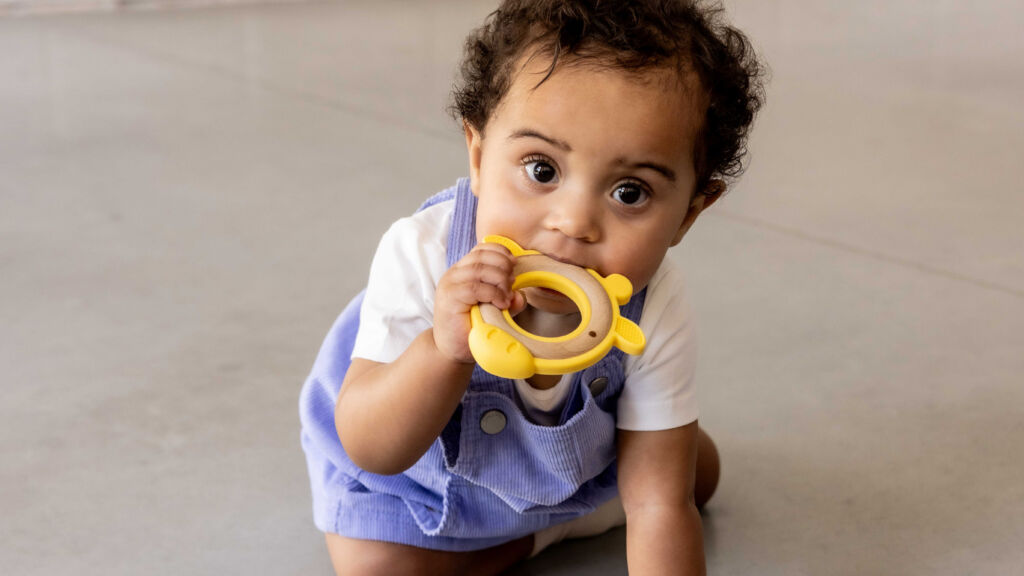
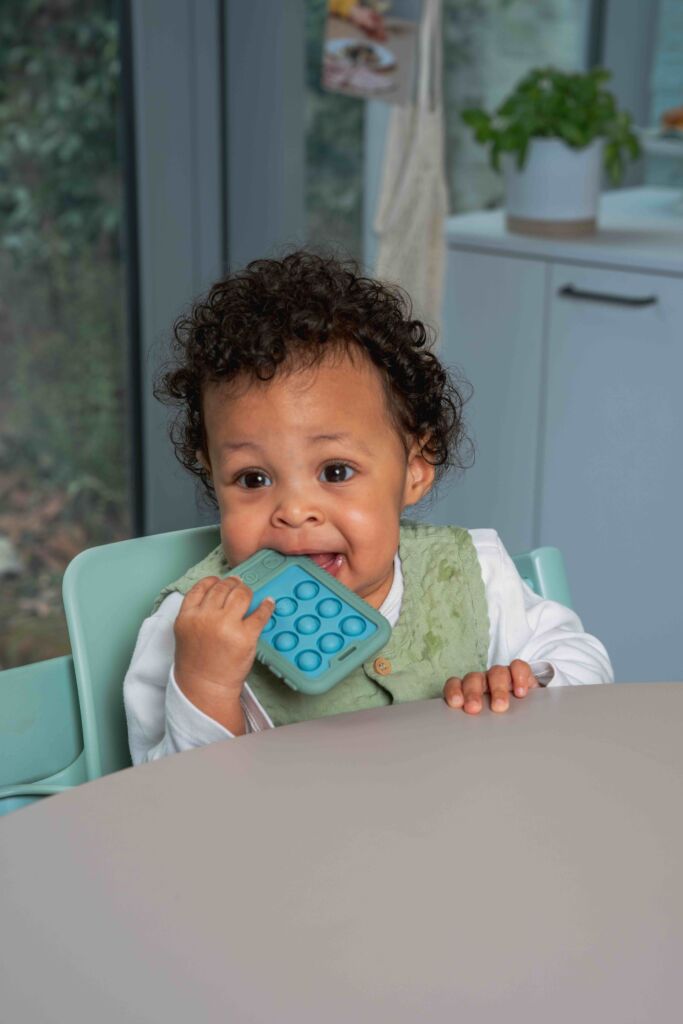
The pressure of teething on the gums causes discomfort. By chewing or biting on hard objects (or your fingers!), your baby seeks relief. This behaviour is therefore completely normal.

Give your baby a teething ring from the refrigerator (not the freezer!) to soothe their gums.
3. 'All babies teethe in the same way.'
MYTH
Some babies hardly notice when their teeth are coming through, while others really suffer: crying, poor sleep, eating less... So there is no universal teething process. Every child experiences it differently.
4. 'Teething can cause diarrhoea.'
MYTH
There is no scientific evidence that teething itself causes diarrhoea. What can happen is that your baby puts everything in their mouth, which increases the risk of bacteria (and therefore looser stools). But actual diarrhoea? That usually has a different cause.
Stay alert if diarrhoea persists or if your baby looks ill.
5. ‘Your baby drools more when teething.’
FACT
Increased saliva production is a classic symptom. The gums become more sensitive, which stimulates the salivary glands. So don't panic if your baby suddenly starts drooling litres. It's all part of the process.
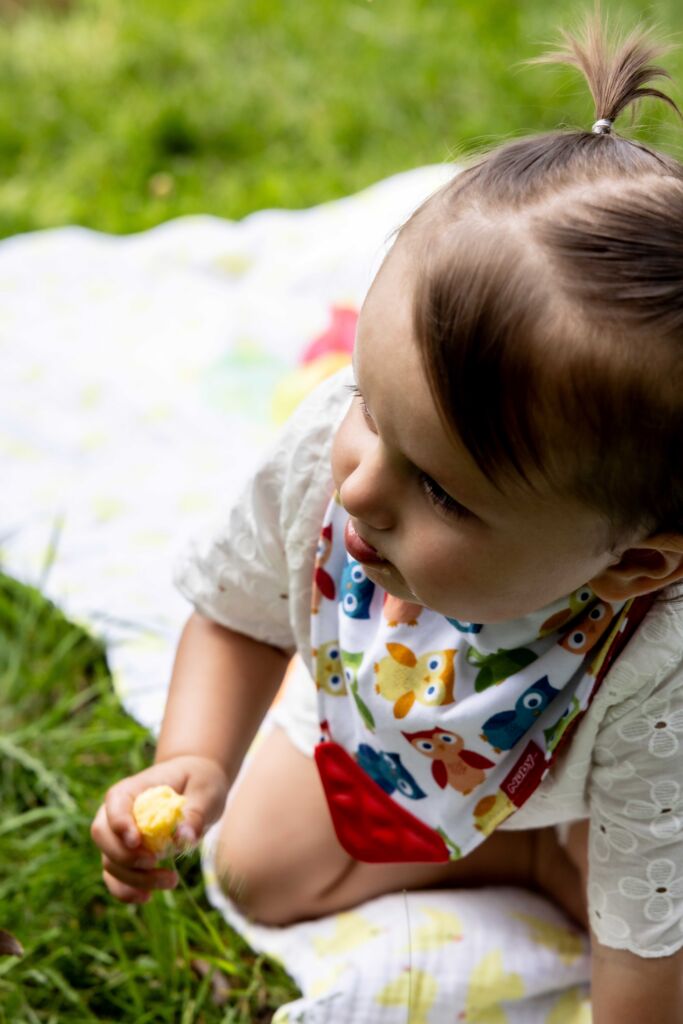
A cute bandana bib prevents wet clothes and looks adorable too.
6. ‘Teeth always come through in the same order.’
FACT – usually
In most cases, teeth come through in a typical order: first the two lower incisors, then the upper incisors, followed by the sides and then the molars. But here too, variations are normal. As long as the milk teeth are complete by around 2.5 to 3 years of age, there is no need to worry.
7. 'There are remedies to ease the pain.'
FACT – but choose wisely
Teething rings, cold washcloths and extra cuddles often help a lot. Nûby has all kinds of products to support healthy tooth development, such as fun cooling teething rings, from the first tooth to a full set of teeth.

There are also gels and homeopathic remedies available, but be careful what you use. Not all teething gels are suitable for young babies. Never use products containing lidocaine without medical advice. Always ask your pharmacist or paediatrician for advice. And no, rubbing honey, vinegar or a little brandy (!) on the gums may have been done in grandmother's childhood, but these are certainly not recommended “miracle cures”.
8. ‘Your baby’s appetite is reduced.’
FACT – with a big 'however'
When teething, your baby may temporarily have difficulty drinking or eating because their gums are sensitive. However, a prolonged loss of appetite, where your baby drinks noticeably less or even loses weight, is not normal. This may indicate another condition, such as an ear infection, throat infection or a virus. Keep a close eye on your baby and seek medical help in good time, as it is not safe to simply attribute a loss of appetite to teething.
What can you do if your baby is suffering from teething?
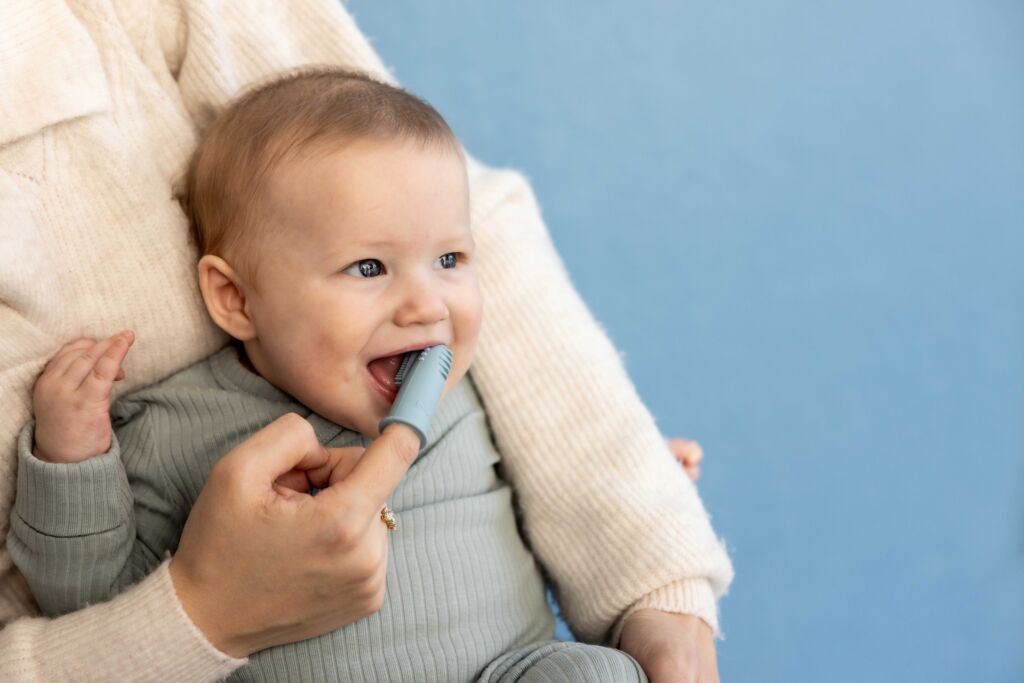
- Gently massage the gums with a clean finger.
- Let your baby chew on a (cooled) teething toy.
- Provide extra comfort and closeness; these are difficult days.
- If necessary, give paracetamol (on prescription or on the advice of your doctor) if your baby is in a lot of discomfort.
- Keep their regular sleep pattern as stable as possible, even if the nights are tough.

Finally: it will pass, really!
Teething can be tough, both for your baby and for you. But every phase passes. Before you know it, your little one will be smiling at you with adorable little teeth and you will have half forgotten those sleepless nights. And as always: trust your gut feeling. You know your baby best.