For many parents, their baby's very first milk tooth is a real milestone. But that joy is often accompanied by a few minor ailments (for the child) and a lot of questions (for the parents). When can you expect which tooth to appear? And how do you know if your baby's tooth development is “on track”? Is there even such a thing as a schedule? In this article, you can read all about it – from the very first white tip to a full set of milk teeth.
When does a baby get its first tooth?
Your baby's first teeth develop during pregnancy, deep in the jawbone. It is only a few months after birth that these teeth make their way to the surface. On average, the first tooth appears when your baby is 6-10 months old, but this can vary greatly from child to child. Some babies start growing teeth after 4 months, others only after 1 year.
That very first tooth (and the rest, for that matter) looks like a small, white dot peeking through the gums. You can often feel it before you see it. For example, gently rub your baby's gums with a clean finger. Do you notice a harder spot or a sharp edge? Bingo!

Teeth development in babies: schedule
- 6-10 months: the two middle teeth at the bottom (central incisors) usually appear first.
- 8-12 months: the middle upper incisors follow.
- 9-13 months: the two teeth next to the middle ones, above and below, come through.
- 12-16 months: the first 4 molars erupt.
- 16-20 months: the canine teeth emerge.
- 20-30 months: the remaining 4 molars complete the set of milk teeth.
Around the age of 2.5 to 3 years, most children have their full set of milk teeth: a total of 20 teeth (8 incisors, 4 canines and 8 molars).

Once again: every child is unique! The schedule above only gives a few averages. Is your child noticeably early or late in relation to the time indications? Usually, this is nothing to worry about. Genes play an important role (when did you get your first teeth?) and, for example, premature babies usually get their first teeth a little later.
Are you unsure? Or have you noticed that your child does not yet have a full set of milk teeth at the age of three? Then it is best to ask your dentist or paediatrician for advice.
Teething: symptoms
Teething is no fun for your baby. Here are some typical symptoms:
- excessive drooling
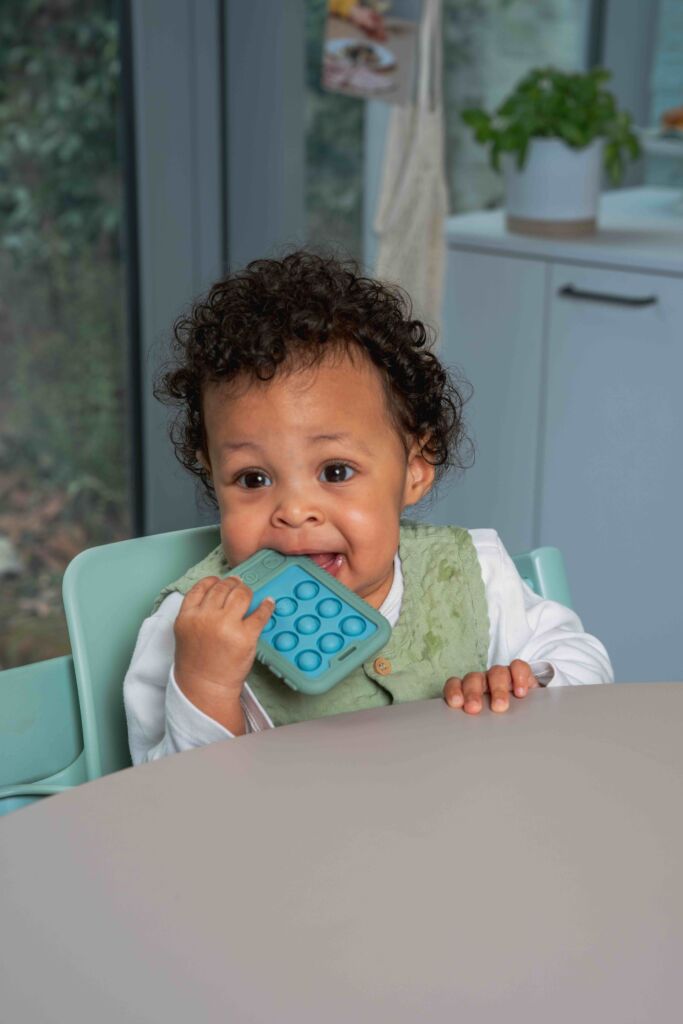
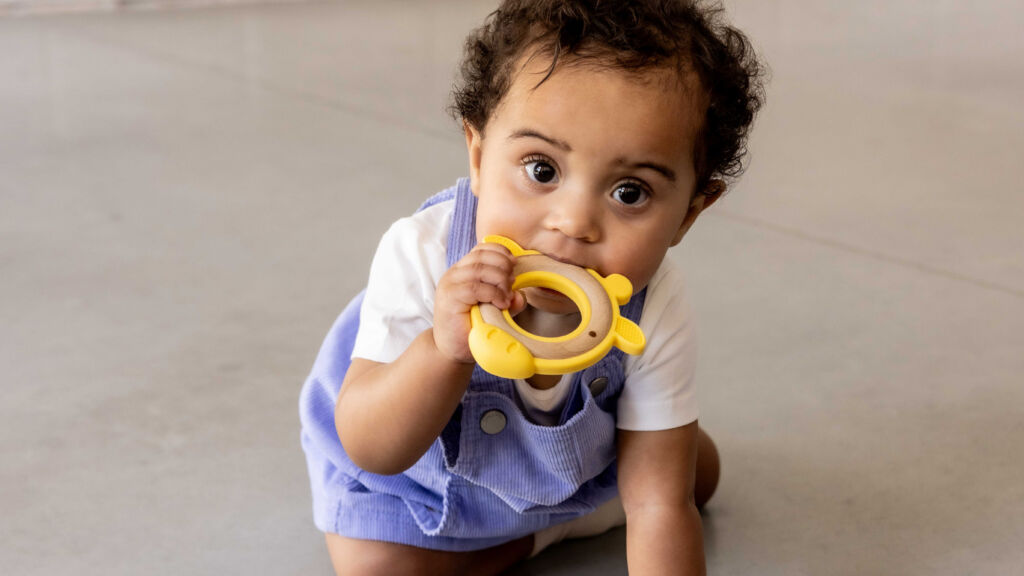
- chewing or sucking on anything within reach
- gums with red or swollen edges
- tearful or restless behaviour, especially at night
Please note: these symptoms do not always occur simultaneously, and some complaints may have other causes. If in doubt, always consult a doctor.
By the way, did you know that teething does not cause fever? In this article, we list some facts and myths about tooth development.
Fortunately, there are all kinds of ways to support your child when they are teething. One of these is a cooling teething ring. This allows your baby to apply pressure to their gums (in a refreshing and safe way) and thus relieve the pain.
It is best to choose one with gel instead of water. The gel helps the teething ring retain its cooling effect for longer. Simply place it in the fridge (not the freezer!) and it is ready to use. Gentle on the gums, yet firm enough to bite on. This helps your child through the teething phase in a safe and natural way.

Teething at your own pace
Teething can raise a lot of questions. Don't be too guided by averages or schedules, but focus on your child. An early or late beaming smile with teeth is usually just a matter of heredity and individual development. With a little extra support and the right tools – such as a cooling teething ring – you can get through this phase together without (too much) worry.